
A better way to work with cattle starts with understanding.
After seeing first-hand how stressful and unsafe traditional halter training could be, Bree set out to build a calmer, safer approach. Today, she helps cattle owners and handlers understand behaviour, build trust and create better outcomes for both cattle and people.
ABOUT BREE'S BOVINE BEHAVIOUR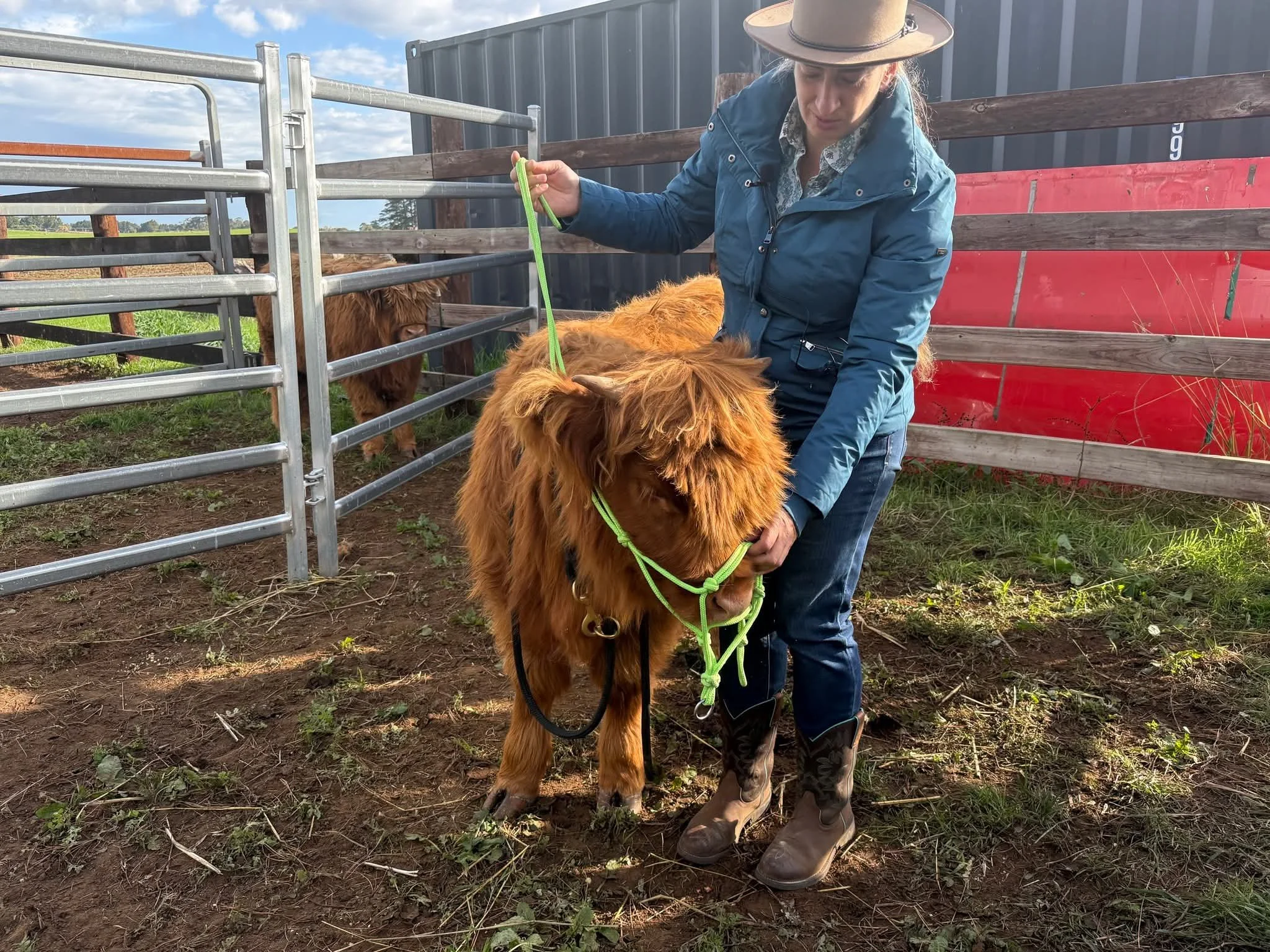
How it began
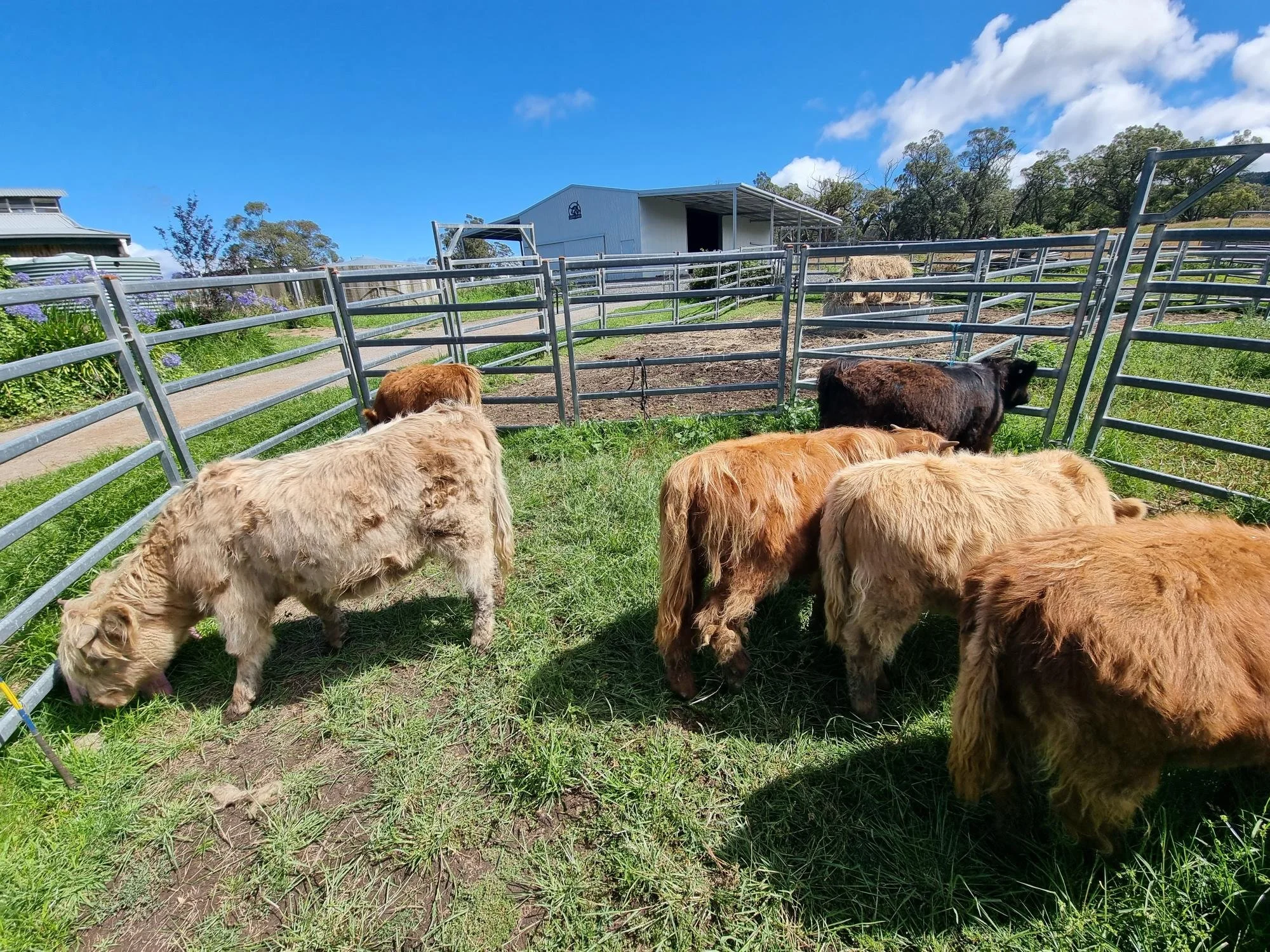
Bree’s experience with cattle began with washing a Highland heifer that tried to kick her. It was quite the introduction, but it also marked the beginning of more than a decade spent breeding, halter training and showing Highland cattle from a property in Gisborne, Victoria.
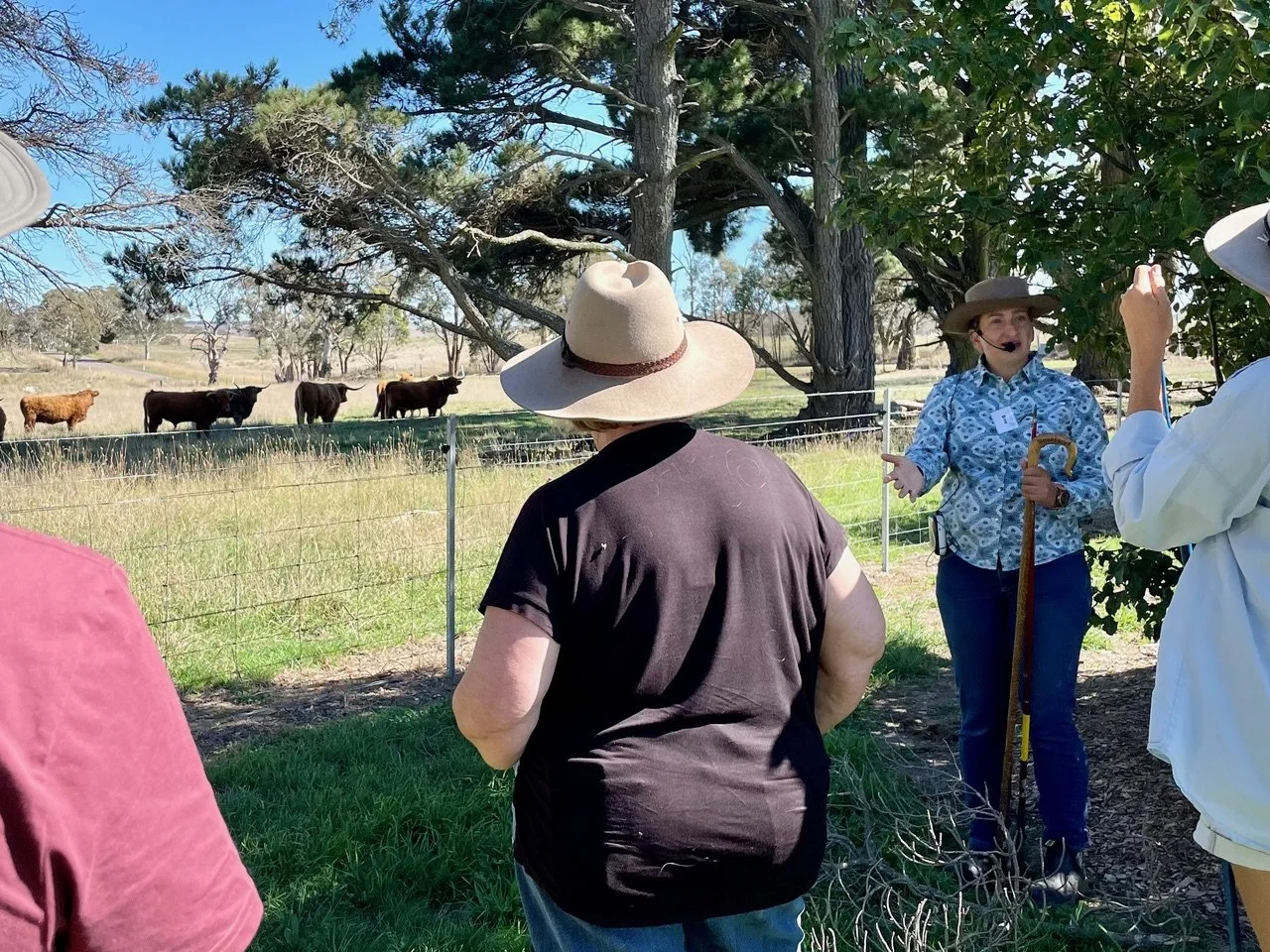
Along the way, Bree became active within the Victorian Highland breeders group, attended Cattle Handlers Camps and helped organise practical education for other cattle owners and handlers.
Why behaviour became the focus
Bree’s first experience of cattle halter training was confronting.
Untouched cattle were haltered in the crush, dragged to a nearby post and tied until they stopped pulling back. The cattle were frightened and panicked, with little consideration given to their welfare or the safety of the handler.
When Bree realised this was considered the normal way to train cattle, she knew there had to be a better approach.
That moment became the beginning of her work in Natural Cowmanship and her commitment to creating safer, calmer and more respectful ways of working with cattle.
Experience that shapes the work

Natural Cowmanship
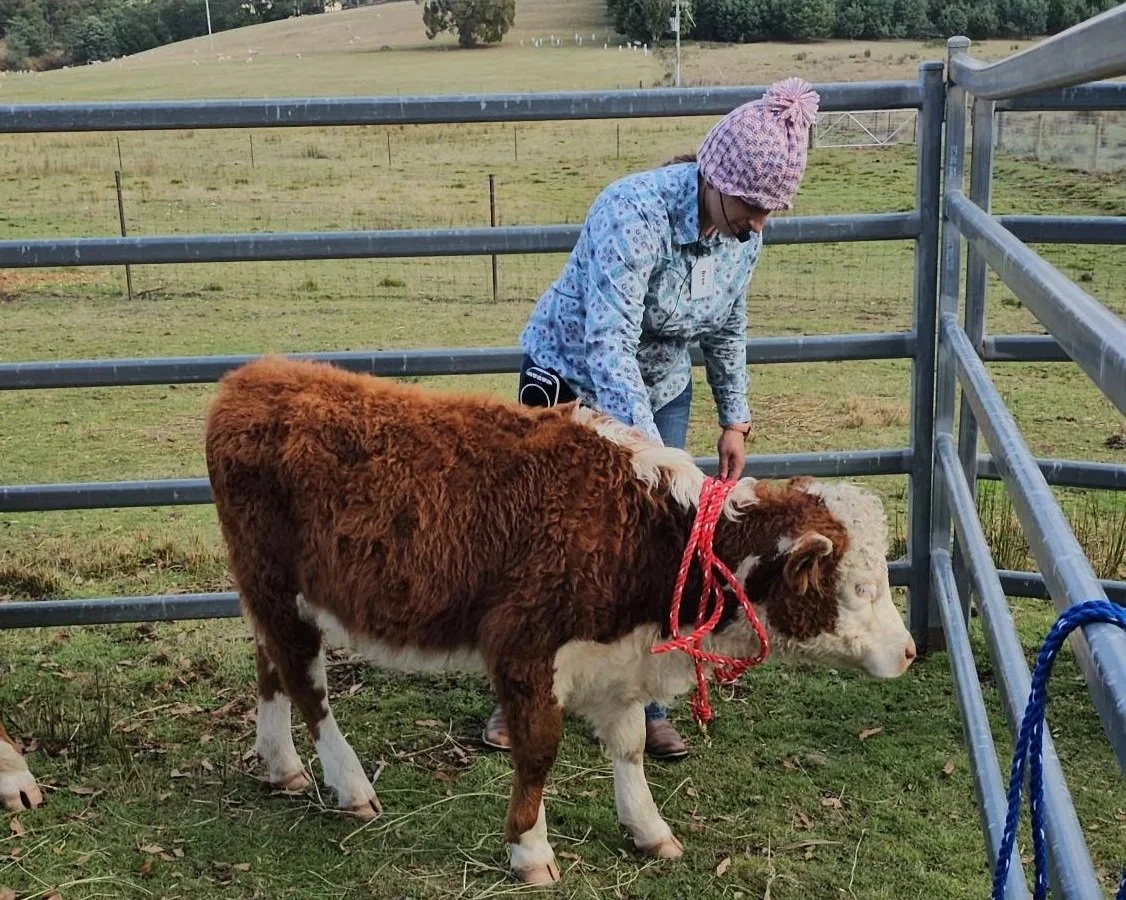
Mentored by Kaye Thomas, Bree has continued refining Natural Cowmanship techniques through years of practical work, learning and problem-solving to better support cattle and their handlers.

Education and behaviour
A Bachelor of Animal and Veterinary Biosciences from La Trobe University, followed by a career in veterinary nursing, animal behaviour education and natural horsemanship.

Hands-on cattle experience
More than 10 years spent breeding, halter training and showing Highland cattle, with hands-on experience working with animals from young calves through to mature cows and bulls.
Who Bree works with?
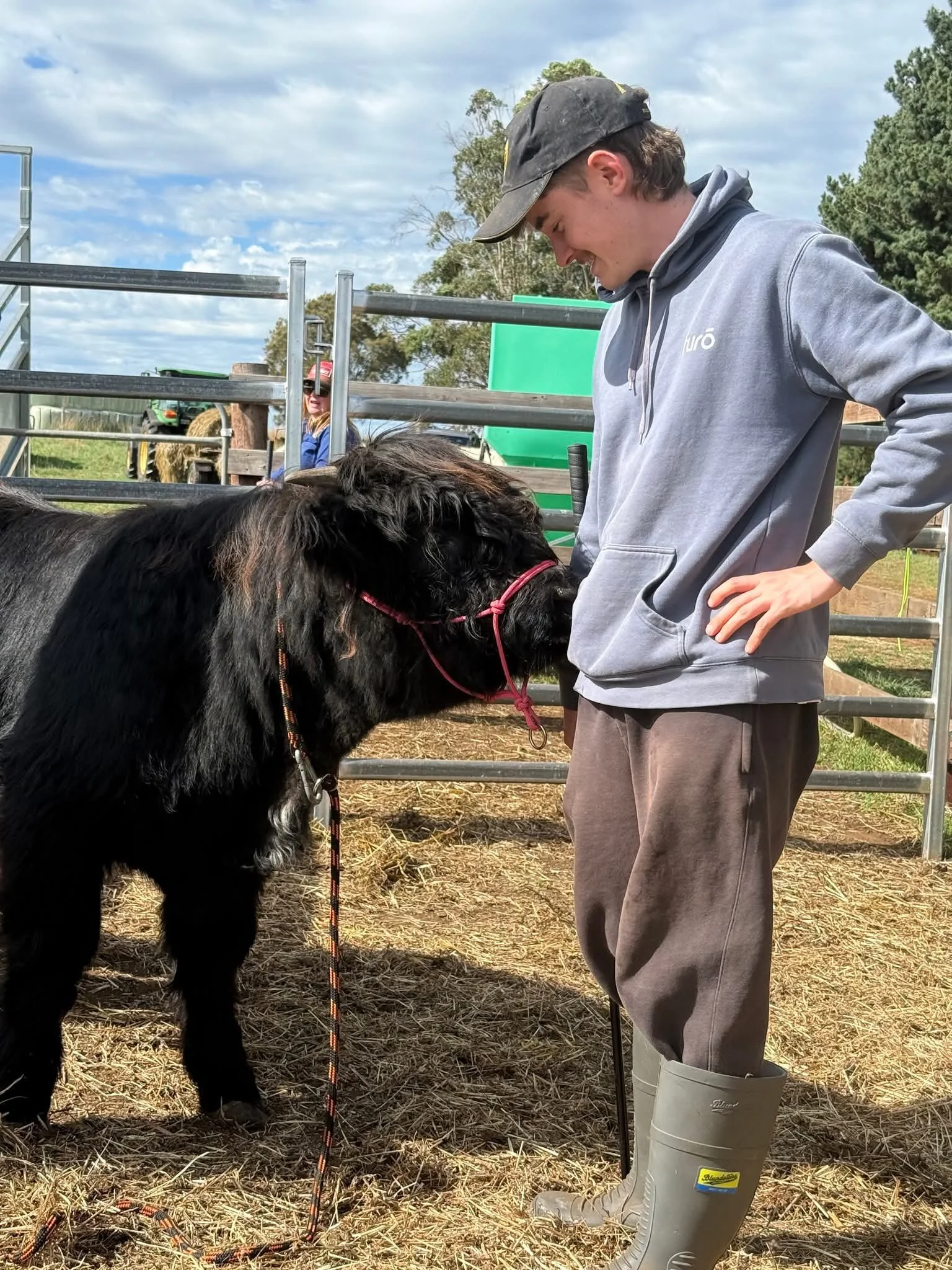
Bree works with all ages of cattle, from young calves through to mature bulls and older cows.
She also works with handlers at every stage, from first-time cattle owners who have not yet purchased their first animals to experienced stockmen with more than 25 years in the industry.
Her training can support:
Beginners, families and first-time cattle owners
Experienced cattle handlers and stockmen
Young handlers and adults
Nervous, unsettled or difficult-to-handle cattle
Overconfident cattle that have become difficult to move
Multiple cattle breeds across both private and clinic settings
Bree has delivered clinics across most Australian states, working with a wide range of cattle, handlers and experience levels.
What clients are often dealing with:
Bree’s goal is not simply to work with the cattle in front of her. It is to help each handler understand what their cattle are communicating so they can move forward with greater knowledge and confidence.
An incident or close call has made working with cattle feel stressful, unpredictable or unsafe.
Confidence shaken
Cattle that were expected to be quiet or friendly have become difficult to approach, handle or move.
Unexpected behaviour
Clients may be facing behaviours they have not encountered before and feel unsure about what they are doing wrong or how to move forward.
Need for practical guidance
“Cattle are smarter than we often give them credit for. When we understand their behaviour and communicate in a way they can understand, we can build relationships based on trust and safety. Better cattle handling should make life easier for people and more enjoyable for cattle too.”
— Breanne Francis
Ready to work with Bree?
Whether you are just starting out, working through a challenging behaviour or wanting to create calmer and more confident handling, Bree is here to help.